Strength, Recovery & Bones
Why Muscle Loss Speeds Up After Menopause (and How to Stop It)
Why muscle slips faster after menopause, and the habits that slow it down.
Maybe you've noticed it already. Grocery bags feel heavier. Getting up off the floor takes a little more effort. Your arms look softer, even though your weight hasn't changed much.
That's not just "getting older." It's muscle loss, and after menopause, it speeds up.
We start slowly losing muscle in our 30s, about 3% to 8% per decade. But for women, the years around menopause are when that loss really picks up. In one study, the rate of sarcopenia (age-related muscle loss that's significant enough to affect health) jumped from 3% in early perimenopause to about 30% in late perimenopause and after menopause.
Why it matters so much
Muscle does far more than help you lift things:
-
It keeps you strong and independent, so you can carry groceries, play with grandkids, and travel for years to come
-
It protects your bones and joints, and lowers your risk of falls and fractures
-
It powers your metabolism, since muscle burns more calories than fat, even at rest
-
It helps control blood sugar, because muscle soaks up sugar from your blood
The good news? Muscle loss isn't inevitable. You can slow it, stop it, and even reverse it, at any age. Let's talk about why it happens and exactly what to do about it.
This article is for education only and isn't medical advice. Talk with your provider before starting a new exercise program, supplement, or medication.
Why muscle loss speeds up after menopause
1. Estrogen drops
Your muscles are full of estrogen receptors, and estrogen helps your muscles grow, repair, and recover. When estrogen falls at menopause, that support disappears. In a study that followed 234 women from perimenopause into early postmenopause, menopause was linked to measurable losses in muscle mass all over the body, down to the individual muscle fibers.
2. Your muscles get "harder to wake up"
As we age, our muscles become less responsive to the signals that tell them to grow, like exercise and protein. Scientists call this anabolic resistance. It means you need a bigger signal to get the same result, like more protein per meal and more challenging workouts. Research even suggests postmenopausal women may respond less to resistance training than younger women, which is why doing it consistently matters so much.
3. Growth hormone declines
Growth hormone helps your body build and maintain muscle, and it naturally drops as we get older. Less growth hormone means less muscle-building support.
4. Life slows us down
Poor sleep, joint aches, busy schedules, and less energy often mean we move less after 50. And muscles follow a simple rule: use it or lose it. In that same study of 234 women, staying physically active was one of the things that helped protect muscle.
5. We often don't eat enough protein
Many women eat less overall as they age, and protein is often the first thing to slip, especially at breakfast and lunch.
The takeaway: menopause makes it easier to lose muscle, but it doesn't make it inevitable. You just need to give your muscles stronger reasons to stay. That comes down to three things.
Step 1: Resistance training (the most important step)
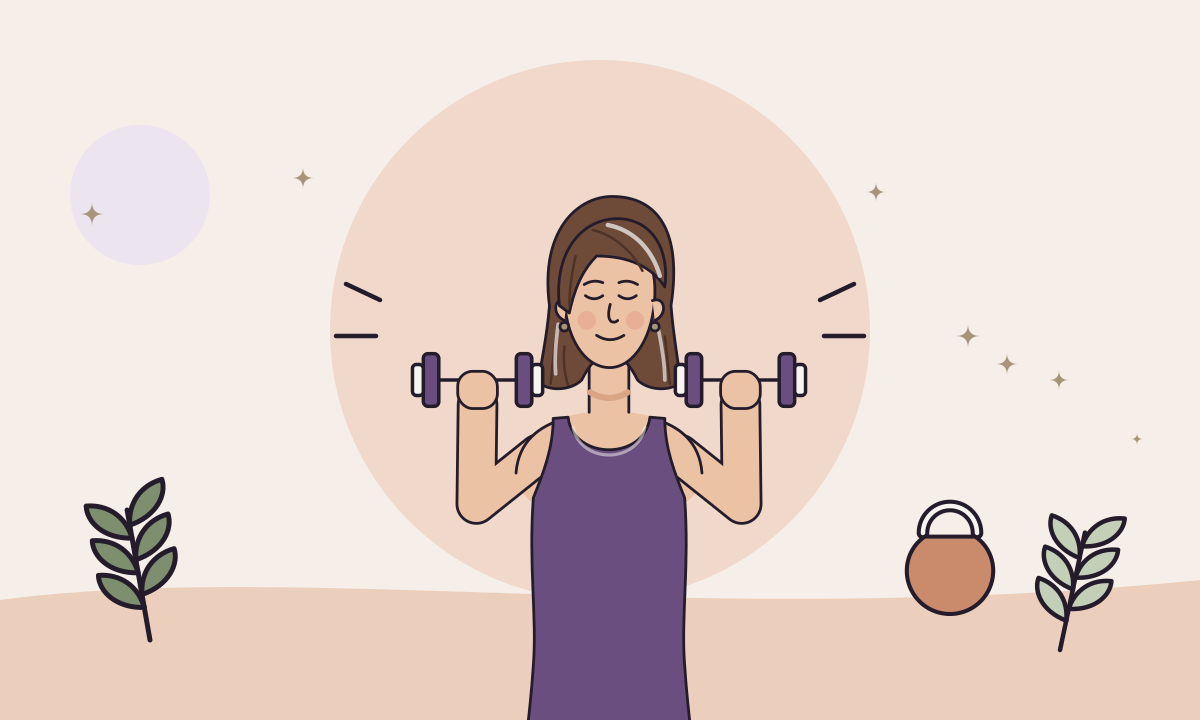
If you do only one thing from this article, make it this. Resistance training is the strongest signal you can send your body to keep, and build, muscle. No supplement or medication comes close.
And it's never too late to start. Studies in women well into their 60s, 70s, and beyond show they can still get stronger and build muscle with the right training.
What it looks like
Resistance training just means making your muscles work against resistance. That can be:
-
Dumbbells or kettlebells at home or the gym
-
Weight machines, which are great for beginners because they guide your movement
-
Resistance bands, which are inexpensive and easy on the joints
-
Your own body weight, like squats, lunges, and push-ups
How to do it right
-
Train 2 to 3 times a week, with a rest day in between for the same muscles.
-
Hit every major muscle group: legs, glutes, back, chest, shoulders, arms, and core.
-
Make it challenging. The last couple of reps of each set should feel hard. Because of anabolic resistance, your muscles need a real challenge to respond. Light weights you could lift forever won't do much.
-
Keep progressing. As exercises get easier, add a little more weight, more reps, or more sets. This is called progressive overload, and it's what keeps your muscles growing.
-
Focus on form first. A few sessions with a trainer can help you learn the movements safely.
Don't be afraid of heavier weights
Many women worry that lifting heavier will make them "bulky." It won't. Women don't have the hormones to bulk up easily, especially after menopause. What you'll get is a firmer, stronger, more capable body, plus stronger bones.
A simple full-body routine to start
Do this 2 to 3 times a week:
-
Goblet squat (holding one dumbbell at your chest): 3 sets of 8 to 12
-
Romanian deadlift with dumbbells: 3 sets of 8 to 12
-
Dumbbell chest press on a bench or the floor: 3 sets of 8 to 12
-
Bent-over dumbbell row: 3 sets of 8 to 12
-
Overhead shoulder press: 2 to 3 sets of 8 to 12
-
Farmer's carry (walking while holding heavy dumbbells): 3 rounds of 30 to 40 seconds
New to strength training? Start with bodyweight versions or light weights, and build up from there.
Step 2: Eat enough protein (at every meal)
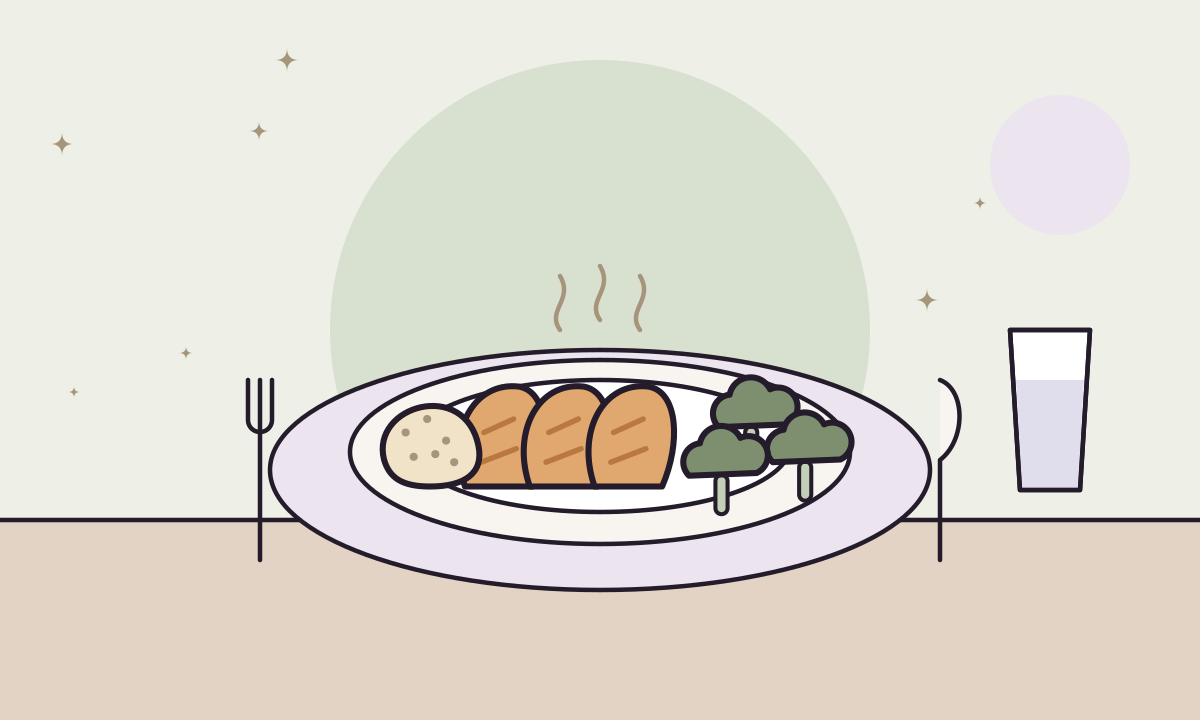
Resistance training sends the signal to build muscle. Protein provides the building blocks. You need both.
Why timing matters
Because of anabolic resistance, older muscles need a bigger dose of protein at once to switch on muscle building. Researchers found that about 25 to 30 grams of high-quality protein per meal is what it takes to maximally stimulate muscle growth in both younger and older adults. When older adults ate less than about 20 grams at a meal, their muscle-building response was blunted.
Here's the problem: most of us eat our protein backwards. A typical day looks something like 10 grams at breakfast, 20 at lunch, and 60 at dinner. But your muscles can only use so much at one time, so a more even split, like 30 grams at each meal, works much better.
How to hit 25 to 30 grams per meal
-
Breakfast: Greek yogurt, eggs or egg whites, cottage cheese, or protein oats
-
Lunch: Chicken, tuna, salmon, turkey, or a big salad topped with lean protein
-
Dinner: Lean beef, fish, chicken, pork tenderloin, or tofu
-
Snacks: String cheese, jerky, a protein shake, or edamame
If breakfast is your weak spot (it is for most women), check out our 5 High-Protein Grab-and-Go Breakfasts You Can Prep Ahead.
Want to dig deeper? Read The One Thing Most Women Over 50 Aren't Eating Enough Of.
Step 3: Add creatine
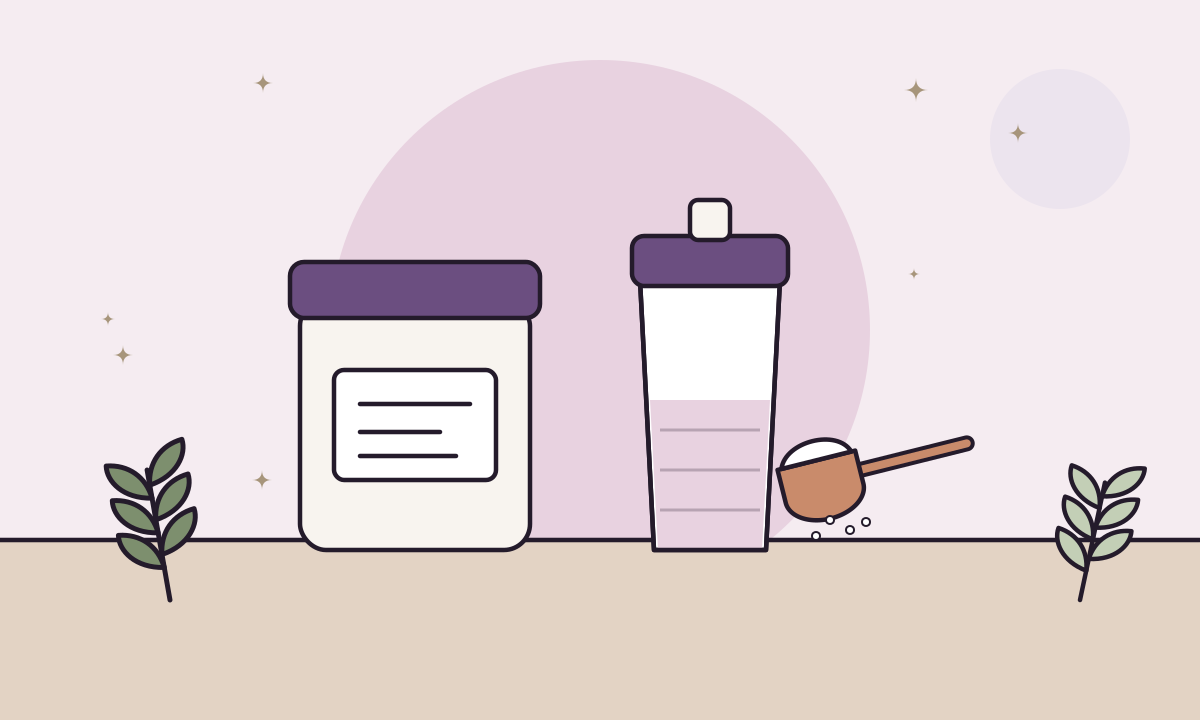
Creatine is one of the most researched supplements in the world, and it's especially helpful for women after menopause.
How it helps
Creatine gives your muscles quick energy for short, hard efforts, like the last few reps of a set. That lets you train a little harder, and over time, that adds up to more strength and muscle. It's the perfect partner to resistance training.
What the research shows
A 2026 review of seven trials in postmenopausal women found that creatine boosted lean mass and increased leg-press strength by about 7.5 kilograms (about 16 pounds) compared with placebo, with no signs of harm. The best results came from taking at least 5 grams a day alongside resistance training.
How to take it
-
Choose creatine monohydrate. It's the best studied and the most affordable.
-
Take about 5 grams a day. Timing doesn't matter much. Just be consistent.
-
Mix it into anything. Unflavored powder disappears into coffee, water, smoothies, or protein shakes. Capsules work too.
Good to know: You might see a pound or two of water weight at first. That's water stored inside your muscles, not fat. If you have kidney problems, check with your doctor first.
The $10 Supplement Every Woman Over 50 Should Know About
Want an extra boost? What women are saying about tesamorelin
Resistance training, protein, and creatine are the foundation, and for most women, they're enough to make a real difference. But if you've got those three in place and want something to help them go further, some women look into tesamorelin.
What it is
Tesamorelin is a peptide that signals your body to make more of its own growth hormone. Since growth hormone helps build and maintain muscle and declines with age, the idea is that boosting it may help your training and nutrition work even harder.
What the research shows
Tesamorelin (brand name Egrifta) is FDA-approved, but only to reduce belly fat in people with HIV. In those trials, it cut deep belly fat by about 18% over six months. It hasn't been formally studied for muscle in women after menopause, so using it that way is off-label.
What people report (anecdotal)
A lot of what we know about tesamorelin outside of those trials comes from the experiences of people using it under a provider's care. Clinics that prescribe it and online communities commonly describe a similar pattern:
-
Better sleep first. Many people notice deeper, more restful sleep within the first few weeks.
-
A leaner midsection over time. Changes to belly fat and body shape usually show up around the three-month mark, often without much change on the scale.
-
Firmer, more toned look, especially when paired with consistent strength training and enough protein
-
Better recovery between workouts
Keep in mind these are personal experiences and clinic reports, not clinical trial results, and some of them come from clinics that sell it.
Good to know
-
It works with the basics, not instead of them. Tesamorelin won't build muscle on its own without training and protein.
-
Results fade when you stop. In the trials, the belly fat came back after people stopped taking it.
-
Possible side effects include joint pain, swelling, injection site reactions, and higher blood sugar, so your provider should monitor your bloodwork.
-
Only get it from a licensed provider and a legitimate pharmacy, never from a "research peptide" website.
The bottom line
Muscle loss speeds up after menopause because of falling estrogen, muscles that become less responsive with age, declining growth hormone, and a life that tends to slow down. But it's not a one-way street.
You can protect and even rebuild your muscle with three simple habits:
-
Resistance training 2 to 3 times a week, with weights that actually challenge you
-
25 to 30 grams of protein at every meal
-
About 5 grams of creatine a day
And if you want an extra boost to make those three go further, tesamorelin is an option to explore.
The stronger you are now, the stronger, more energetic, and more independent you'll be for decades to come. It's never too late to start.