Weight & Metabolism
The One Thing Most Women Over 50 Aren't Eating Enough Of
How much protein you actually need after 50, with a simple cheat sheet.
Let me guess what breakfast looked like today. Coffee, maybe some toast, maybe a few bites of something while you ran around. Am I close?
That's how most of us eat. But once you learn how much protein actually matters, you may be a little mad nobody told you sooner. It's not glamorous, and it's not a new trend. But it might be the simplest change that makes the biggest difference in how full you feel and how strong you stay.
So let's talk about it.
So how much do you actually need?
The official number you'll see on government charts is 0.8 grams of protein per kilogram of body weight. But that number was set to prevent deficiency in adults in general. It was never meant to protect muscle in a woman who's 55.
Experts who focus on women our age aim higher. A European bone and muscle health group recommends about 1.0 to 1.2 grams per kilogram a day for postmenopausal women, with at least 20 to 25 grams at each main meal.
The easy way to do it in pounds: multiply your weight by about 0.5. Here's a quick cheat sheet:
| Your weight | Daily protein goal |
|---|---|
| 130 lbs | about 60–70 g |
| 150 lbs | about 68–82 g |
| 170 lbs | about 77–93 g |
| 190 lbs | about 86–104 g |
If you're lifting weights or trying to lose weight, aim for the higher end.
The bigger shift for most of us isn't the daily total, though. It's spreading it out. Most women eat a tiny bit of protein at breakfast, a little at lunch and a big pile at dinner. Your muscles do better with a solid dose at each meal, and about 25 to 30 grams is a good target.
Why protein keeps you full
Remember how hunger got louder after menopause? Protein is your best tool for turning the volume back down.
Researchers have found that protein is the most filling of the three macronutrients, ahead of carbs and fat. It does a few helpful things at once:
-
It takes longer to digest, so you stay satisfied longer.
-
It nudges your gut to release fullness hormones and helps calm ghrelin, the "feed me" hormone.
-
Your body burns more energy digesting protein than it does digesting carbs or fat.
You'll notice it most at breakfast. Swap the toast for eggs and Greek yogurt, and see if that 10:30 snack attack still shows up.
Why it matters so much for your muscles now
This is the part that really got me. After menopause, we lose muscle faster. Part of that is aging, and part of it is losing estrogen, which was helping protect our muscles all along.
As we get older, our muscles also get a little "harder of hearing." They need a bigger dose of protein to get the message to repair and rebuild. The amount that kept your muscles happy at 35 might not cut it at 55. That's why the per-meal target matters so much.
And muscle isn't just about looking toned. It's what keeps you strong enough to carry groceries, get up off the floor, keep your balance and protect your bones. It also helps your body manage blood sugar.
One important note: protein works best as a team player with strength training. Protein gives your muscles the building blocks, and lifting tells them to use them. You really want both.
What does 25–30 grams actually look like?
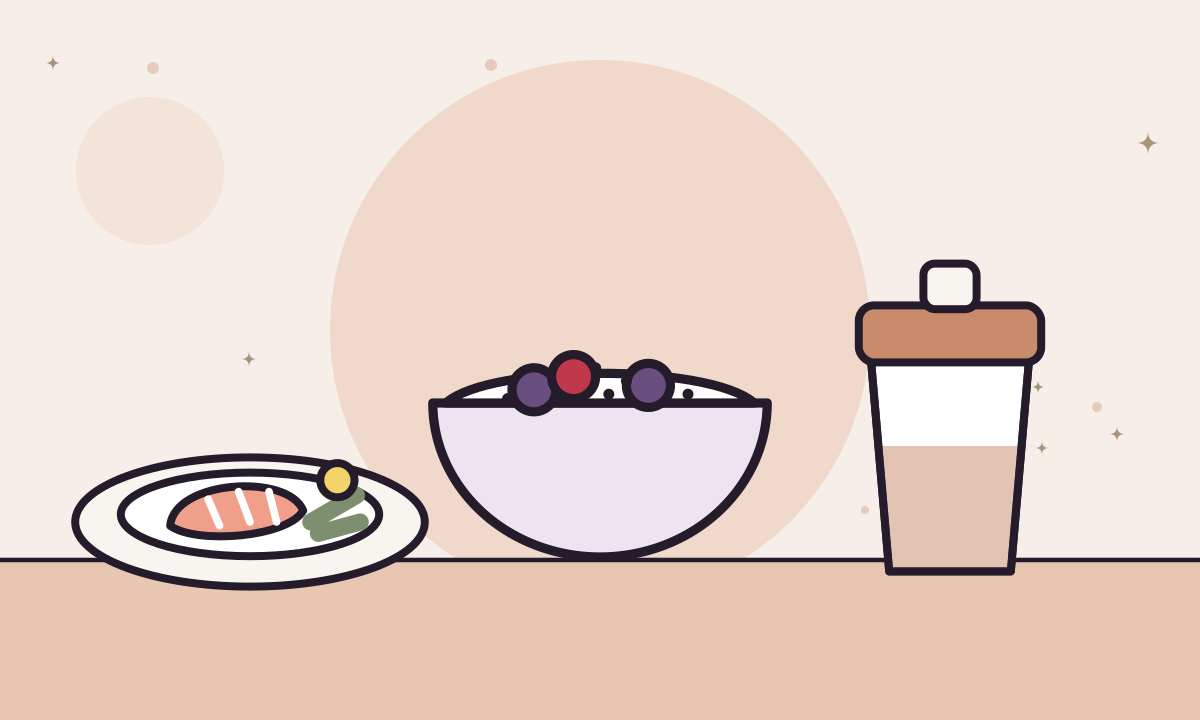
This is where it clicks for most people. Here are some everyday foods (amounts are approximate):
| Food | Protein |
|---|---|
| 4 oz cooked chicken breast | about 30–35 g |
| 4 oz salmon | about 25 g |
| 1 cup cottage cheese | about 25 g |
| 1 cup plain Greek yogurt | about 20–25 g |
| 1 scoop protein powder | about 20–25 g |
| 1 can (5 oz) tuna | about 25 g |
| 3 large eggs | about 18 g |
| 1 cup cooked lentils | about 18 g |
A day that hits about 90 grams
-
Breakfast: Greek yogurt with berries and a spoonful of protein powder stirred in (about 30 g)
-
Lunch: A big salad with 4 oz chicken (about 30 g)
-
Snack: Cottage cheese with a little fruit, or a protein shake (about 15–25 g)
-
Dinner: Salmon, roasted veggies and some quinoa (about 30 g)
My favorite easy wins
-
Start with breakfast. That's where most of us fall short.
-
Keep "grab and go" protein around: hard-boiled eggs, string cheese, Greek yogurt cups, rotisserie chicken.
-
Stir unflavored protein powder into your oatmeal or smoothie. (Collagen is lovely for skin, but it's missing some of the building blocks muscle needs, so don't count it toward your protein goal.)
-
Swap regular pasta for a lentil or chickpea pasta.
-
Make your protein the first thing on your plate, and eat it first.
One quick note: if you have kidney disease or your doctor has told you to limit protein, check with them before you bump it up.
Keep reading
-
10 high-protein breakfasts that aren't eggs again
- Why am I always hungry after menopause?
-
Your first 4 weeks of strength training
-
Best protein powders for women over 50